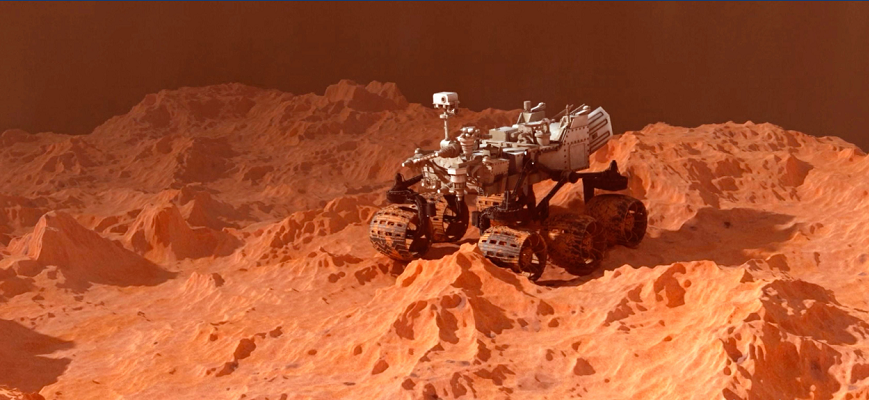
A fascinating geological study on the planet Mars has been using LIBS technology to make geochemical observations since 2012.
In the case of laser Induced Breakdown Spectroscopy (LIBS) known from the FOSS Micral™ analyzer, talked about a method that has been tried and tested on Mars since 2012.
In this article we talk to PhD Jens Frydenvang from the University of Copenhagen that has a background in physics with a PhD in analytical chemistry focusing on LIBS. Jens Frydenvang who is using LIBS to study the geology of Mars in collaboration with NASA, was involved in two of the most ambitious LIBS projects that exist today, taking place on Mars. One is the so-called Chemcam instrument, on board the NASA Curiosity rover that landed on Mars in 2012, the other is the Supercam instrument on board the NASA Perseverance rover that landed on Mars three years ago.
The core technology inside both the Chemcam and Supercam is LIBS. The newer Supercam has been upgraded with a few more capabilities, but the technology remains the same. Both instruments have been developed in a collaboration between Los Alamos National Laboratory, in the US where LIBS was originally developed, and the French space agency CNES.
Is there another method available that could provide the same measurements better than LIBS? why should LIBS?. Short answer from Jens Frydenvang is “No, there are other technologies available such as X-ray fluorescence (XRF), but it requires longer analysis time or that you get very close to the sample. Compared to X-ray fluorescence, the LIBS instrument is faster and much more flexible. In addition to that, we have the benefit that because an integral part of LIBS is that we create those explosions on the surface, it means that we quite effectively blow away dust which otherwise covers all parts of the Martian surface. So, due to the inherent concept of LIBS, we actually have a unique way of getting to the underneath rocks without being affected by the ubiquitous surficial dust.”
“So, there are multiple benefits where LIBS really has become a very powerful tool for planetary exploration,” concludes Jens Frydenvang.
Related Products
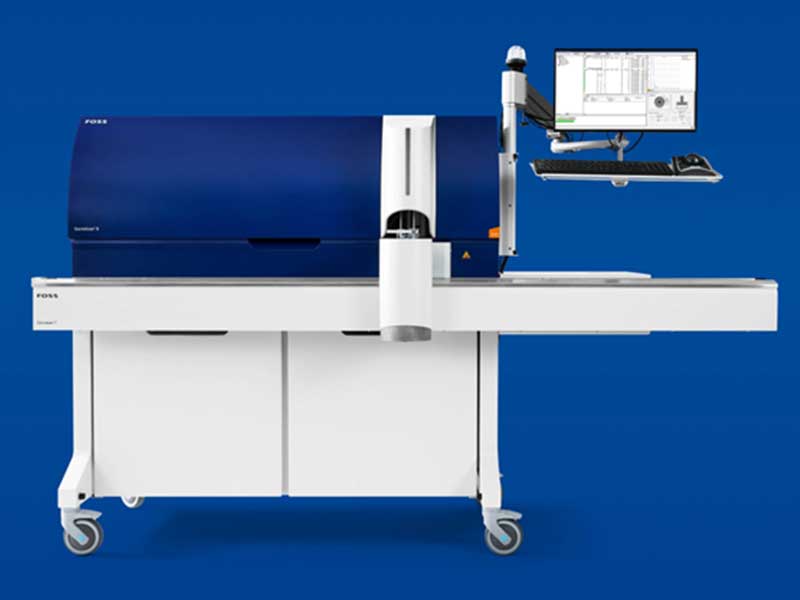
BactoScan™ 5
coolfx2025-09-25T10:36:54+07:00Enables laboratories to analyze bacteria in raw milk more efficiently and with an unprecedented level of safety, making it easier than ever before to improve food safety and ensure milk quality.

NIRS™ DA1650 Feed Analyser
coolfx2020-11-16T17:39:35+07:00Use the NIRS™ DA1650 feed analyser for routine quality control of raw materials and final products to improve efficiency and economy.

Infratec™ 1241 Grain Analyser
coolfx2020-11-16T15:32:47+07:00The 3rd generation Infratec™ 1241 is the world’s most widely used grain analyser. Based on 60 years of experience, Infratec™ is recognised by the global grain industry as the trusted method for grain analysis.